Bio-Responsive
Ingredients
Aroma Molecules
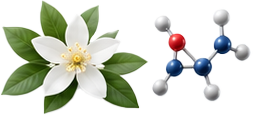

Scent is more than a sensory experience. Aroma molecules can be detected through the olfactory system and the skin, initiating biological signals that interact with the brain, nervous system and interconnected neuroendocrine, immune, autonomic and metabolic pathways.
A&S studies how selected Bio-Responsive Aroma Ingredients are sensed, processed and integrated across these regulatory systems. Through olfactory–brain and dermal–systemic pathways, scent-induced signaling may influence biological processes associated with emotion, stress adaptation, sleep, cognition, skin function and physiological balance.
By integrating Olfactory Science, Sensory Neuroscience, Exposome Research and Bio-Responsive Ingredients, A&S is developing a scientific framework for Neuro Scent Therapy—exploring how scent-based neurological and sensory modulation may support regulation, resilience and Homeostasis.
How Skin Sensing Connects Local Signals with Whole-Body Regulation
The skin is a sensory and biological interface. A&S studies how Bio-Responsive Aroma Ingredients interact with cutaneous
sensory, neuroendocrine, immune and metabolic pathways—and how these interconnected signals may support systemic regulation and Homeostasis.

PNS · HPA · HPT · HPG
 Endocrine

Spinal Afferent · Percutaneous Signals ·
Local Action

Cutaneous HPA Axis


Hormones · Immune Mediators ·
Microbiota Metabolites · Serotonin

Systemic Circulation
Blood & Lymph

Hepatic Biotransformation


ANS


Enteric Nervous System (ENS)

Glucose Transporters (GLUTs)
Monocarboxylate Transporters (MCTs)
Olfactory signals are integrated within the brain and transmitted through interconnected neurobiological pathways. These signals can modulate
endocrine, autonomic, neural, immune, metabolic, circadian and gut–brain functions—linking sensory input with systemic balance and disease-related dysregulation.
Aroma Molecules
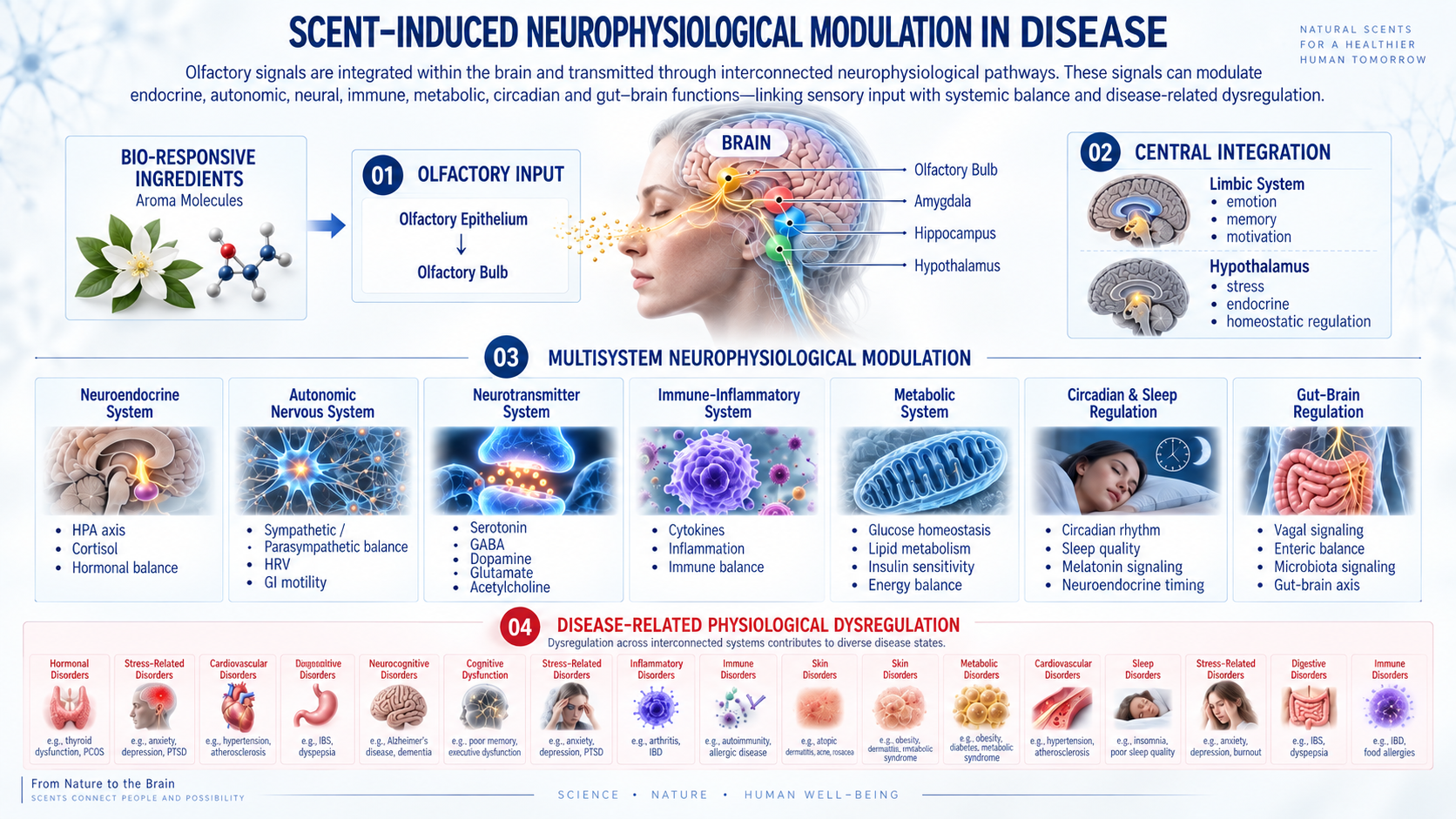 Brain
Dysregulation across interconnected systems contributes to diverse disease states.

e.g., thyroid dysfunction, PCOS

e.g., anxiety, depression, PTSD

e.g., hypertension, atherosclerosis

e.g., IBS, dyspepsia

e.g., Alzheimer's disease, dementia

e.g., poor memory, executive dysfunction

e.g., anxiety, depression, PTSD

e.g., arthritis, IBD

e.g., autoimmunity, allergic disease

e.g., atopic dermatitis, acne, rosacea

e.g., obesity, dermatitis, metabolic syndrome

e.g., obesity, diabetes, metabolic syndrome

e.g., hypertension, atherosclerosis

e.g., insomnia, poor sleep quality

e.g., anxiety, depression, burnout

e.g., IBS, dyspepsia

e.g., IBD, food allergies
How Scent Becomes a Neurobiological Signal
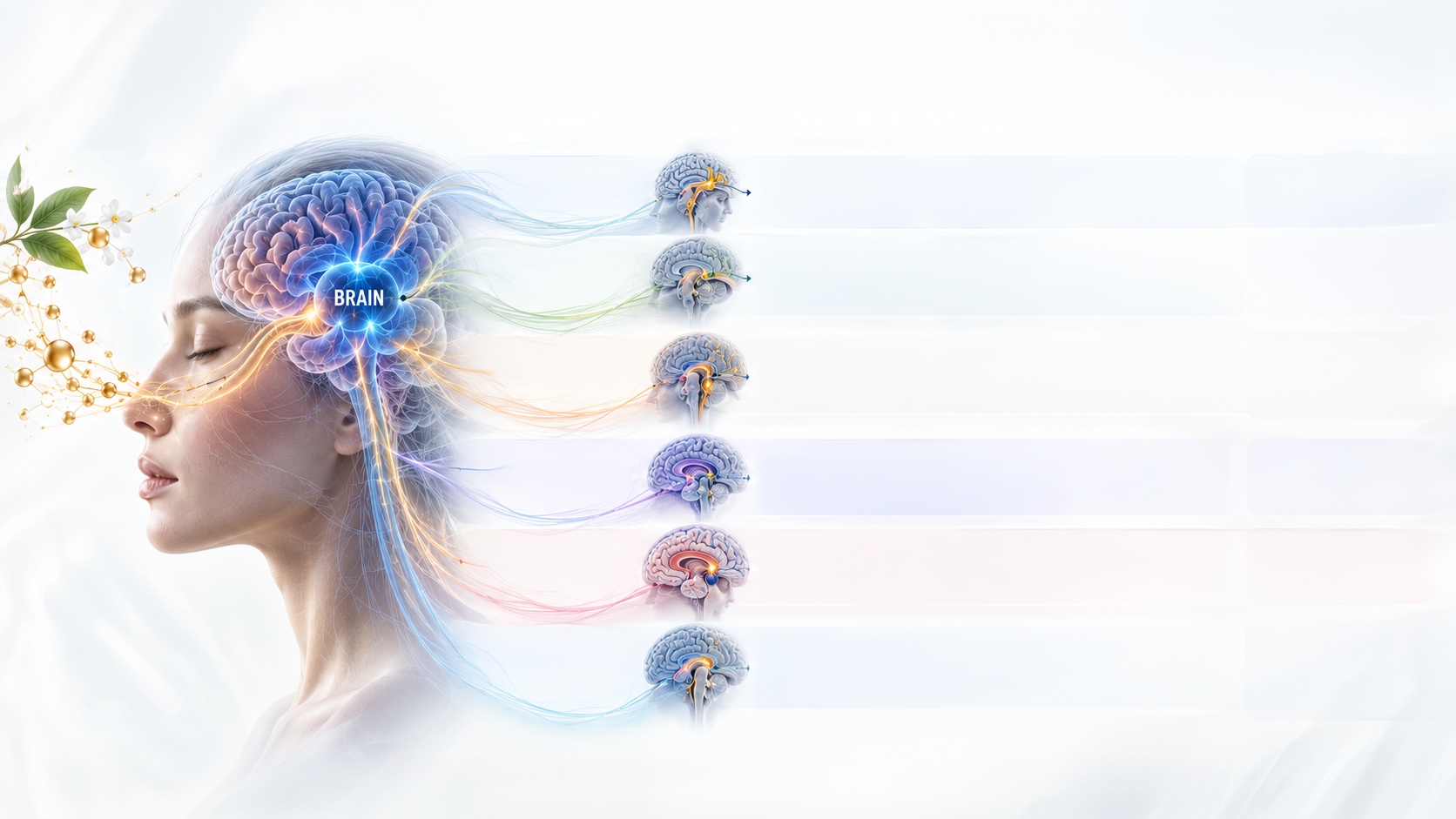
From Nature to the BrainScents connect
people and possibility
Hypothalamus
(CRH)

Pituitary
Gland

Adrenal /
Gonadal Glands

Hormones &
Cytokines
 Endocrine RegulationHormonal Balance
Hypothalamus /
Brainstem

ANS

SNS
(Sympathetic)

PSNS
(Parasympathetic)

Autonomic
Balance
 Blood Pressure &
 Rest–Recovery Balance

Neuromodulatory
Brain Nuclei

5-HT · DA · NE · GABA ·
Glutamate · ACh
 Emotional Stability
 Stress Reduction
 Cognitive Support
Hypothalamic /
Autonomic Pathways

Cytokines
(IL-1β, IL-6, TNF-α, IL-10, etc.)

Immune Cells
(T cell / B cell activity, etc.)
 Immune Homeostasis
 Inflammation Control
Amygdala /
Hippocampus

Prefrontal Cortex

Cognitive &
Emotional Regulation
 Memory · Attention ·
Hypothalamus /
Brainstem

Glucose & Lipid Metabolism ·
Energy Balance · Body Temperature

Metabolic
Regulation
 Metabolic Efficiency
 Energy Balance
 Homeostasis